How do we do it?
Exploration
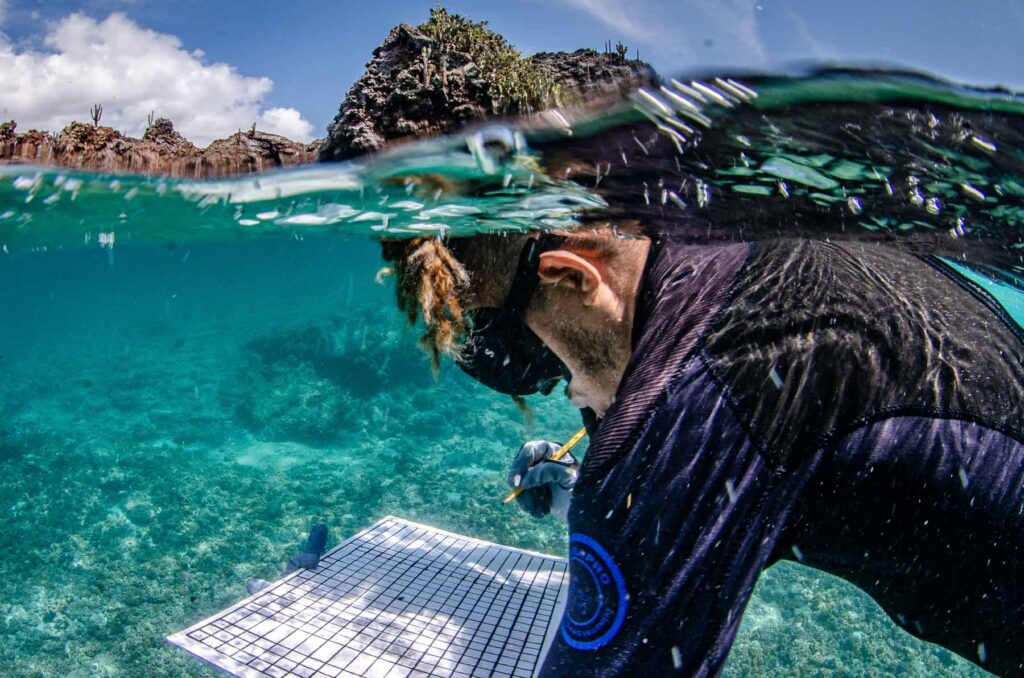
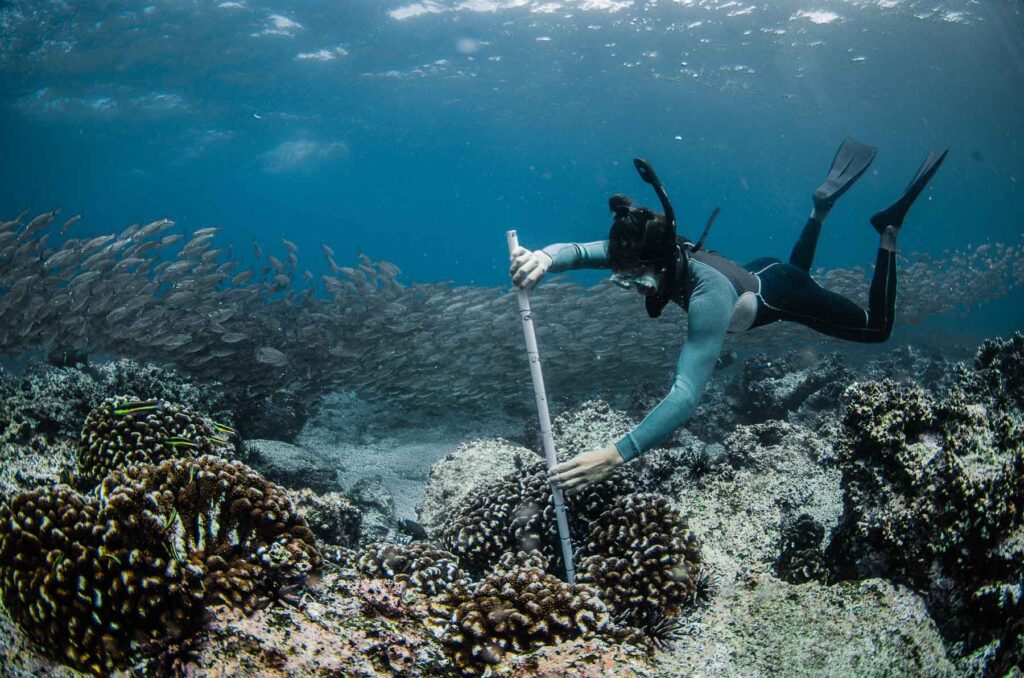
Our team carries out expeditions to chart the Galapagos last surviving coral remnants, generating information on coral abundance, diversity and health to develop distribution maps of the Galapagos remnant coral communities.
Collection
The baseline information allows us to identify coral species, assess coral health and select the best suited corals for restoration. Our team then revisits the site to collect a sample of coral fragments from the selected donor colonies.
Rearing
Coral fragments are labeled and transported to our underwater coral nursery where we carefully maintain them. Our team cultivates the corals fragments for up to a year, monitoring their health, growth and development. Once they reach a mature size corals removed and transplanted back to the reef.
Isabela Restoration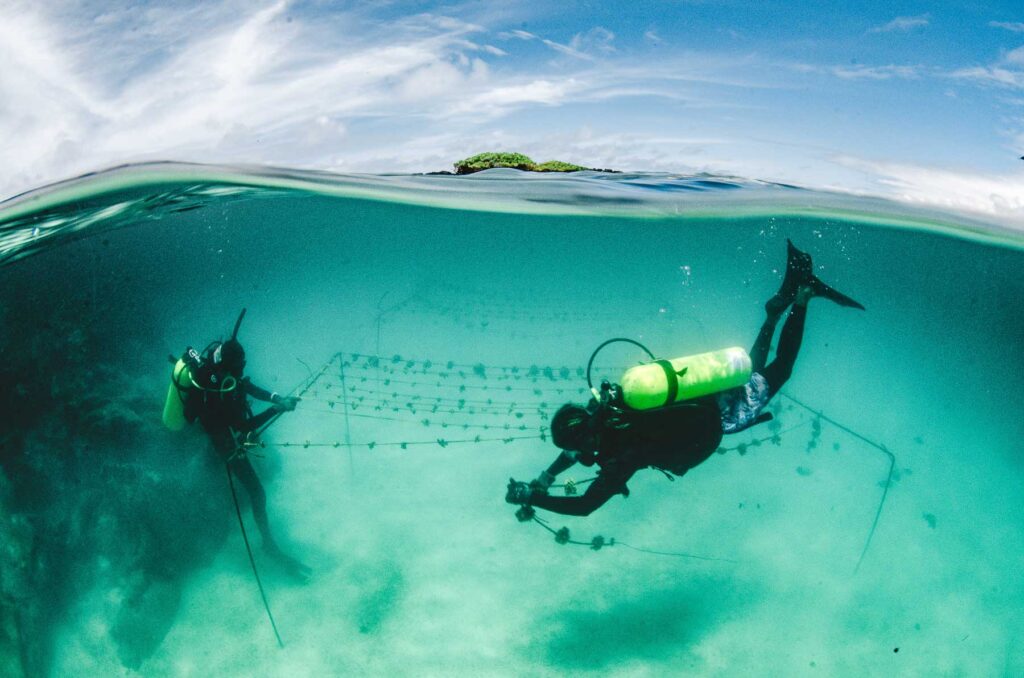
Transplanting
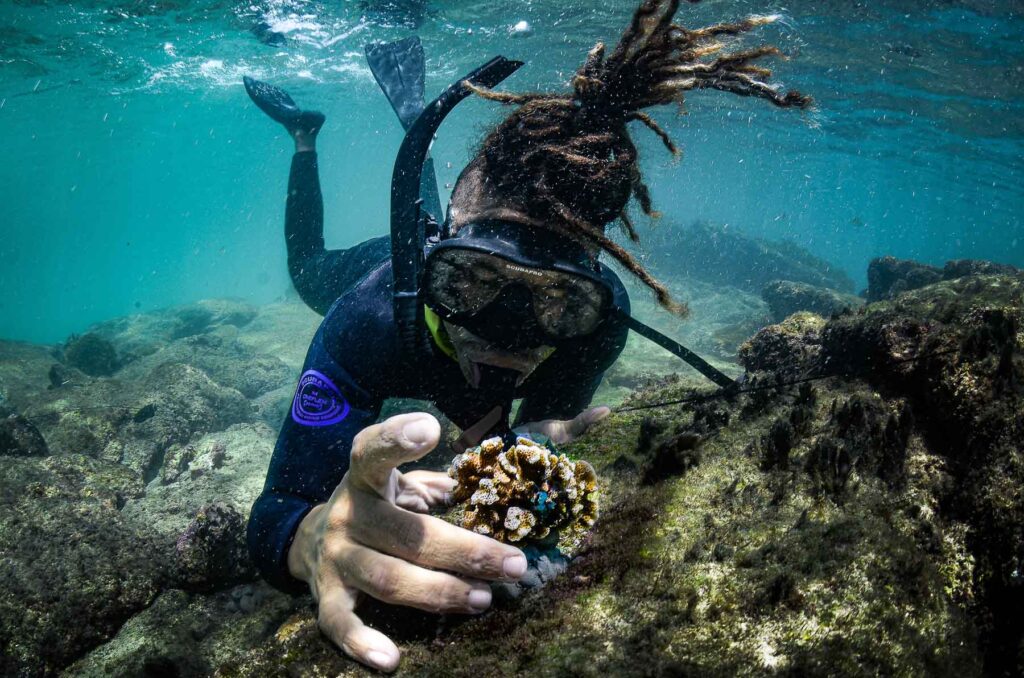
Mature corals are transplanted onto the historic reef areas in order to recreate ecosystem functions and biodiversity. By introducing coral colonies, our team enhances ecosystem resilience, promotes endangered species representation and increases redundancy, reducing extinction risk in the process.
Our Partners